When most people think about wealth management, they think about growing their portfolio. But protecting that wealth — and making sure it actually reaches your family — is just as important. That’s why I want to talk about living trusts today.
A living trust is a legal document you create during your lifetime that holds your assets — your home, your investment accounts, your property — and dictates exactly how those assets are managed and distributed. It’s one of the most powerful estate planning tools available, and in my experience, one of the most underused.
There are several strong reasons to set one up. But if I had to name the single biggest benefit, it’s this: a living trust lets your estate completely bypass probate.
Probate is the court-supervised process of validating a will and distributing assets. On paper, it sounds manageable. In practice, it can be a prolonged, expensive, and emotionally draining ordeal for your loved ones.

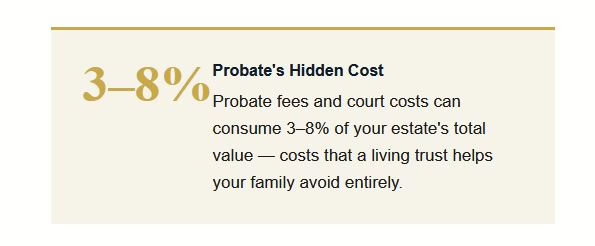
Depending on your state, probate can take anywhere from several months to several years to complete. Attorney fees, court costs, and administrative expenses can eat up 3% to 8% of your total estate value — money that should be going to your heirs, not the court system. And the entire process is a matter of public record, meaning anyone can look up what you owned and who received it.
A living trust sidesteps all of this. Because assets held in the trust are technically owned by the trust — not by you personally — they don’t pass through probate when you die. Your successor trustee simply follows the instructions you put in place, transferring assets to your beneficiaries quickly, privately, and without court involvement.
That speed matters more than people realize. When a spouse or parent passes away, the surviving family is already dealing with grief. Forcing them to spend the next year navigating the court system adds significant stress and financial uncertainty. A living trust removes that burden entirely.
The privacy benefit is equally compelling. Unlike a will — which becomes a public document the moment it enters probate — a living trust remains private. Your asset distribution, your beneficiaries, and the specific terms of your estate plan stay entirely out of the public record. For high-net-worth individuals, that privacy is invaluable.
Setting up a living trust requires working with an estate planning attorney and is typically more involved upfront than drafting a simple will. But the protection it provides — the time saved, the costs avoided, the privacy preserved — makes it one of the smartest long-term financial moves you can make.
You’ve spent years building your wealth. A living trust helps make sure it gets to the right people, at the right time, without unnecessary interference. That’s estate planning — simplified.
Disclaimer: This report is for entertainment purposes only. Every investor should consult with an investment advisor before making investment decisions. The Vodicka Group, Inc. is not a broker/dealer. We do not receive compensation for mentioning stocks. At various times, the clients, publishers and employees of Vodicka Group, Inc., may buy or sell the securities discussed for purposes of investment or trading.